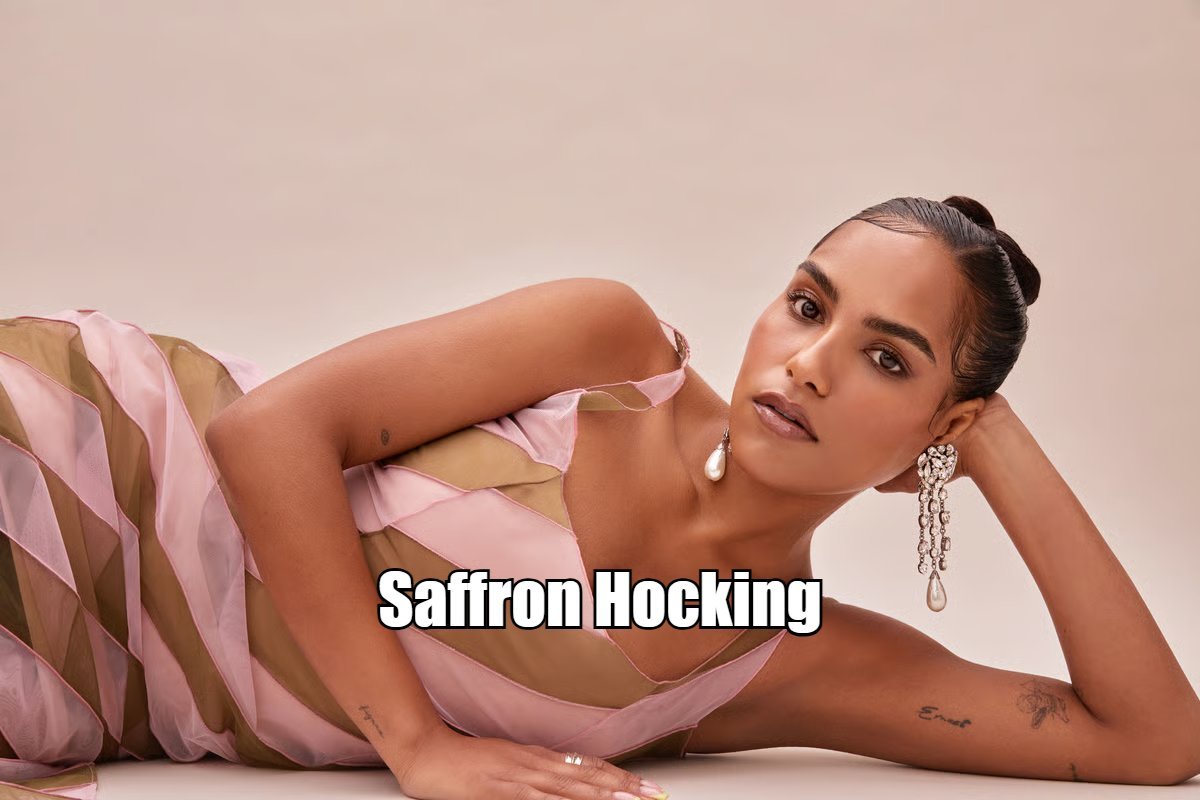
Saffron Hocking has steadily become one of the most interesting names in contemporary British television. Rather than becoming famous through a single overnight success, she has built her reputation through a series of carefully chosen roles, moving between crime dramas, comedies, psychological thrillers, and major international productions. Her performances often have an emotional honesty that makes even complicated characters feel believable.
For many viewers, Hocking became especially recognizable through Netflix’s Top Boy, where she played Lauryn Lawrence. The character developed considerably as the story progressed, eventually giving Hocking some of the most emotionally demanding material in the series. Her work attracted critical attention and helped establish her as considerably more than another supporting performer in a large ensemble cast. Netflix continued to list Hocking among the show’s regular cast members during its final run.
Since then, she has continued expanding her résumé. Appearances in projects including Moon Knight, Riches, The Devil’s Hour, and newer productions such as Hit Point show an actress willing to move between very different fictional worlds. Instead of repeating the same character type, Hocking has gradually demonstrated a range that could keep her working across British television, streaming productions, film, and potentially much larger international projects.
Who Is Saffron Hocking?
Saffron Hocking is a British actress from Greenwich in South East London who has developed a career across television, film, and theatre. Her professional journey stretches back to the mid-2010s, although her profile increased considerably after she became part of Netflix’s revival of Top Boy. Earlier credits helped her build experience, while later performances allowed audiences to see substantially more of her dramatic ability.
Before Top Boy became the role most closely associated with her name, Hocking had already appeared in productions such as Doctors, Partners in Crime, Smalltown, White Gold, and London Kills. Netflix’s own cast material for Top Boy identifies Riches, Moon Knight, London Kills, and White Gold among her other notable screen credits. That variety is important because it shows that her career did not begin with one fortunate casting decision.
Her screen presence is particularly effective in roles that require a mixture of vulnerability and confidence. She rarely makes a character feel emotionally one-dimensional. Even when she is part of a large ensemble, there is usually a sense that something else is happening underneath the dialogue. That subtle quality became especially useful in Top Boy, but it has also carried into the psychological and crime-focused projects she has taken on since.
Early Career and the Experience That Shaped Her Acting
Like many British actors, Saffron Hocking developed her craft through formal training before steadily accumulating professional credits. She trained at the Academy of Live and Recorded Arts, commonly known as ALRA, and graduated in 2014. Her early professional work included theatre, giving her the kind of performance foundation that can be valuable when moving into television and film.
One of her early theatre credits was Richard Bean’s Pitcairn, which was staged in 2014. She subsequently began appearing more frequently on television, including guest roles in BBC productions such as Doctors and Partners in Crime. Those roles were relatively small compared with what would come later, but early television appearances often serve an important purpose for emerging actors. They provide experience working with cameras, established performers, directors, production schedules, and the faster pace of television sets.
Hocking continued adding different genres to her résumé instead of immediately becoming associated with one particular style. Her role as Emma Lyndsey in the BBC comedy White Gold, for example, placed her in a very different environment from the darker material audiences would later see in Top Boy. She also appeared in the crime series London Kills and the film Strangeways Here We Come. Netflix currently includes Strangeways Here We Come in its catalogue and lists Saffron Hocking among the film’s cast.
Saffron Hocking in Top Boy and Her Breakthrough as Lauryn
There is little doubt that Top Boy represents a major turning point in Saffron Hocking’s career. Netflix announced her as one of the new cast members when the series was revived for the streaming platform. She played Lauryn Lawrence, the sister of Jaq, portrayed by Jasmine Jobson. Initially, Lauryn seemed like one part of a much larger network of characters, but her importance increased significantly as the drama continued.
What made Lauryn memorable was her unpredictability combined with genuine emotional vulnerability. Netflix described the character as someone who was not badly intentioned but repeatedly found herself in dangerous situations. That description captures an important part of Hocking’s performance. Lauryn was capable of making poor decisions, but the acting encouraged audiences to understand the fear, pressure, and emotional circumstances surrounding those decisions rather than simply judging the character.
Her storyline later became considerably darker and more emotionally demanding. Hocking had to communicate fear, isolation, complicated relationships, and the consequences of coercive behaviour without allowing Lauryn to become defined by a single experience. That required restraint. Rather than relying entirely on dramatic speeches or exaggerated reactions, much of the performance worked through smaller changes in expression, posture, and delivery.
The industry noticed the result. Hocking received a nomination for Supporting Actress at the 2023 BAFTA Television Awards for Top Boy. The same category included Jasmine Jobson, Fiona Shaw, Lesley Manville, Adelayo Adedayo, and eventual winner Anne-Marie Duff. Being recognized alongside such established performers marked an important moment in Saffron Hocking career and confirmed that Lauryn had become much more than simply a supporting character in a popular Netflix drama.
Moving Beyond Top Boy: Moon Knight, Riches and The Devil’s Hour
A useful measure of an actor’s career is what happens after a breakthrough role. Some performers become strongly associated with one character and struggle to escape it. Saffron Hocking has taken a different route, appearing in projects that vary significantly in genre, scale, and tone. This has allowed her to gradually separate her broader acting identity from Lauryn while still benefiting from the recognition Top Boy created.
One particularly visible credit was Marvel Studios’ Moon Knight, the Disney+ series starring Oscar Isaac, Ethan Hawke, and May Calamawy. Hocking appeared as Dylan in the opening episode. Although it was not one of the show’s central roles, appearing in a Marvel Studios production introduced her to another international audience. Marvel describes Moon Knight as a story centred on Steven Grant and Marc Spector while exploring identity and a supernatural mystery connected with Egyptian gods.
She continued broadening her television work with productions such as Riches and The Devil’s Hour. Riches explored the conflicts surrounding a successful Black British family’s business empire and was created by Abby Ajayi. In the second season of Prime Video’s psychological thriller The Devil’s Hour, Hocking played DS Sam Boyd, a police officer assisting DI Ravi Dhillon in an increasingly complicated investigation. Amazon’s official material specifically identifies Saffron Hocking in the role. Moving comfortably between a glossy family drama, Marvel television, urban crime drama, and psychological thriller demonstrates how deliberately varied her screen career has become.
What Makes Saffron Hocking’s Acting Style Stand Out?
One of Saffron Hocking’s strengths is that her performances rarely appear excessively polished. That may sound unusual as praise, but naturalism is extremely important in contemporary television drama. Characters need to feel as though they existed before the camera arrived and will continue existing after a scene ends. Hocking tends to bring that lived-in quality to her performances.
Her portrayal of Lauryn is probably the clearest example. It would have been easy to approach the character through a familiar collection of dramatic stereotypes. Instead, Hocking allowed contradictory emotions to exist together. Lauryn could appear impulsive in one moment, defensive in another, frightened later, and unexpectedly resilient after that. Real people are inconsistent, and Hocking’s willingness to preserve those inconsistencies made the performance feel more authentic.
Her career choices also suggest that she is interested in character rather than simply visibility. From the comic setting of White Gold to the emotional realism of Top Boy and the complicated mystery of The Devil’s Hour, she has repeatedly moved into productions requiring different rhythms. That adaptability matters in an industry where actors who can move naturally between television, streaming dramas, independent films, and larger productions often have the strongest long-term prospects.
BAFTA Recognition and Her Work With Refuge
The BAFTA nomination for Top Boy represented more than a prestigious line on Saffron Hocking’s résumé. It demonstrated that the emotional complexity of her performance had been noticed by the wider television industry. BAFTA’s official records list Hocking as a Supporting Actress nominee for Top Boy at the 2023 television awards. For an actress whose role had grown considerably within an ensemble drama, the nomination was a significant professional achievement.
Hocking’s preparation for Lauryn’s storyline also led to involvement beyond the television series itself. When she learned that her character would experience domestic abuse, she contacted Refuge while researching the subject and trying to portray the storyline responsibly. She later became an ambassador for the UK charity. Refuge currently lists Hocking among its ambassadors and explains that she approached the organization while preparing for the storyline.
That connection shows a thoughtful approach to difficult acting material. Instead of treating a serious storyline purely as dramatic content, Saffron Hocking sought specialist understanding before portraying it. She has subsequently supported Refuge campaigns, including efforts focused on improving young people’s understanding of unhealthy and controlling relationships. It is an example of an actor using the attention generated by a fictional character to support informed discussion around the real issue that inspired the storyline.
Saffron Hocking’s Recent Projects and Hit Point
Saffron Hocking post-Top Boy career continues to develop. Alongside her work in television, she has expanded further into film. Her more recent screen credits include Hedda, directed by Nia DaCosta and featuring Tessa Thompson, Nina Hoss, Imogen Poots, Nicholas Pinnock, and Tom Bateman. Hocking appears as Jane Ji. She also appears in David Mackenzie’s thriller Fuze, whose cast includes Aaron Taylor-Johnson, Gugu Mbatha-Raw, and Sam Worthington.
An especially important next step is Hit Point, a six-part British police thriller in which Hocking has been cast in a lead role opposite Nick Blood. UKTV officially announced the pair as leads, with Hocking playing Bella and Blood playing Leo. The production comes from Urban Myth Films, with Misfits creator Howard Overman writing the series. For Hocking, moving from standout supporting performances to leading a crime series represents a logical progression.
The project is particularly worth watching because it gives Hocking greater responsibility within the story. Supporting characters can make an enormous impact, as Lauryn proved, but a lead role demands something different: an actor must help carry the tone, pacing, emotional stakes, and audience investment across an entire series. A BAFTA TV Preview and Q&A for Hit Point was held in London on July 20, 2026, with Saffron Hockingappearing alongside other members of the production. The project therefore looks like an important new chapter in a career that has been moving steadily upward.
Why Saffron Hocking Is an Actress Worth Following
British television has produced many performers who became internationally recognizable after appearing in ambitious home-grown dramas, and Saffron Hocking appears well positioned to follow that path. She already has experience with Netflix, Disney+, Prime Video, ITV-related productions, BBC television, film, and theatre. More importantly, she has demonstrated that she can make an impact without needing to dominate every scene.
Her trajectory also illustrates the value of gradual career building. Hocking worked across smaller television roles, theatre productions, comedy, crime dramas, and film before Top Boy significantly increased her visibility. Even after receiving a BAFTA nomination, she continued choosing varied projects instead of simply looking for another version of Lauryn. That approach can help an actor develop longevity rather than becoming closely associated with one successful performance.
With roles in productions such as The Devil’s Hour, Saffron Hocking, Fuze, and particularly the lead role of Bella in Hit Point, the direction of her career remains interesting. The challenge now is not proving that she can deliver a strong supporting performance; she has already done that. The next stage is seeing how effectively she can carry increasingly prominent roles of her own.
Frequently Asked Questions About Saffron Hocking
Who is Saffron Hocking?
Saffron Hocking is a British actress known for her work in television, film, and theatre. She gained widespread recognition for playing Lauryn Lawrence in Netflix’s crime drama series Top Boy. Over the years, she has appeared in several successful productions, including Moon Knight, Riches, and The Devil’s Hour.
What is Saffron Hocking famous for?
Saffron Hocking is best known for her role as Lauryn Lawrence in Top Boy. Her performance received significant attention because she brought emotional depth and realism to a complicated character. The role also earned her a BAFTA Television Award nomination for Supporting Actress.
What other shows has Saffron Hocking appeared in?
Apart from Top Boy, Saffron Hocking has appeared in several television series and films. Some of her notable projects include Marvel’s Moon Knight, ITV’s Riches, Prime Video’s The Devil’s Hour, White Gold, and London Kills. She has also worked in theatre productions and independent films.
Did Saffron Hocking win any awards?
Saffron Hocking has received industry recognition for her acting, including a BAFTA Television Award nomination for Supporting Actress for her performance in Top Boy. While she has not won a major acting award yet, the nomination highlighted her growing reputation in British television.
What character did Saffron Hocking play in Top Boy?
In Top Boy, Saffron Hocking played Lauryn Lawrence, the sister of Jaq Lawrence. Her character became an important part of the show’s later storylines, exploring themes of relationships, personal struggles, and difficult choices within the world of the series.
Is Saffron Hocking still acting?
Yes, Saffron Hocking continues to work in television and film. She has taken on new projects after Top Boy, including roles in productions such as Hedda, Fuze, and the upcoming crime thriller series Hit Point, where she plays a leading role.
Conclusion
Saffron Hocking‘s rise has been gradual, which may ultimately prove to be one of the strongest features of her career. She has gained experience across theatre, television, film, comedy, crime drama, psychological thrillers, and major international streaming productions. Each project has added something slightly different to her résumé rather than simply repeating what worked previously.
Her performance as Lauryn in Top Boy remains a defining achievement. It transformed what could have remained a secondary character into someone audiences remembered and discussed, ultimately contributing to Saffron Hocking BAFTA Supporting Actress nomination. The sensitivity she brought to the role also led to her relationship with Refuge, demonstrating the seriousness with which she approached some of the character’s most difficult material.