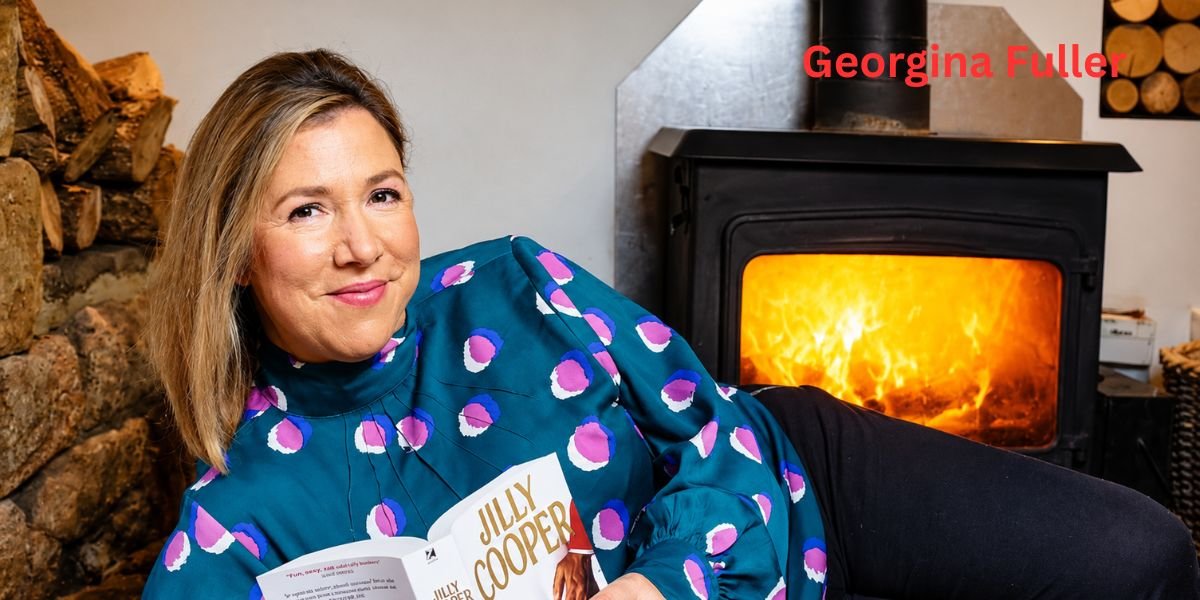
Georgina Fuller is a British freelance journalist, editor, speaker and media consultant whose work has appeared across some of the UK’s best-known newspapers and magazines. Over a career spanning more than two decades, she has written about family life, parenting, careers, travel, relationships, neurodiversity and the changing realities of modern life. Her ability to combine personal experience with wider social issues has become an important part of her journalistic style.
Readers may recognise her name from publications including The Telegraph, The Times, The Guardian, Daily Mail and The i Paper. Her portfolio, however, goes much further than national newspapers. Fuller has also contributed to lifestyle and women’s magazines such as Tatler, Marie Claire, Red, Good Housekeeping, Grazia and Prima. That range tells you quite a lot about her career: she has never restricted herself to just one type of journalism.
What makes Georgina Fuller particularly interesting is that many of her articles start with ordinary experiences—raising children, navigating midlife, dealing with work or reflecting on family—and then open into much broader conversations. Rather than keeping herself completely outside the story, she is comfortable using her own experiences when they help readers understand an issue. That approach has allowed her to build a recognisable voice in British lifestyle and opinion journalism.
Who Is Georgina Fuller?
Georgina Fuller is a freelance journalist, editor and media consultant based in the UK. On her professional website, she describes herself as having more than 20 years of experience and lists family, lifestyle, neurodiversity, travel and careers among the subjects she covers. She has also worked as a speaker and journalism lecturer, meaning her professional life now extends beyond simply writing articles.
Her published work reflects an unusually broad range of interests. Some journalists spend most of their careers covering one beat, such as politics, finance or sport. Fuller’s work is more flexible. Parenting might be the focus of one piece, while another could explore workplace culture, travel, friendship, education, relationships or life in the Cotswolds. Earlier professional profiles have also highlighted her writing on HR, leadership and equality.
That variety has helped her develop the kind of career that suits freelance journalism particularly well. Instead of being identified with a single newspaper or magazine, Fuller has built a portfolio across numerous publications and formats. Her LinkedIn profile currently identifies her with journalism for The Telegraph, The Times and The i Paper, while her broader career includes contributions to many other publications.
Georgina Fuller’s Journalism Career
Georgina Fuller has spent more than two decades working in journalism, but her career has not remained fixed in one subject area. She has explained that her earlier journalism included business-to-business writing, workplace trends, human resources and interviews. Over time, particularly as a freelancer, her subject range expanded significantly into lifestyle, parenting, travel, neurodiversity and first-person features.
Her list of bylines is substantial. According to her own professional biography, Fuller has contributed to The Daily Telegraph, The Guardian, The Times, Daily Mail, The Observer, i Paper and Daily Express. Her magazine credits include Red, Tatler, Marie Claire, Grazia, Prima, Good Housekeeping, Woman, Woman’s Own and Take a Break. She also writes a column for the Stratford Herald.
This range matters because each publication has a different audience and editorial style. Writing a personal family feature for a national newspaper requires a different approach from discussing workplace culture for a business publication. A lifestyle magazine feature has its own tone again. Fuller’s ability to work across those formats demonstrates one of the most important skills in freelance journalism: adapting your voice without losing the personality that makes your work recognisable.
What Does Georgina Fuller Write About?
Family and parenting are major themes in Georgina Fuller journalism. As a mother of three, she frequently examines the gap between idealised ideas about parenting and what everyday family life actually looks like. Her published pieces have discussed homework, children’s independence, family holidays, childcare costs and different approaches to raising children. In a 2017 Telegraph article, for example, she wrote from her experience as a mother of three about how travelling as a family changes once another child is added to the equation.
Fuller also writes extensively about work and careers. Raconteur describes her as a freelance journalist who has specialised in writing about the world of work, while other professional biographies mention HR, leadership and equality among her areas of coverage. These subjects connect naturally with some of the bigger questions found throughout her journalism: how people balance professional ambition with personal responsibilities and how workplaces respond to changing expectations.
Travel, midlife and lifestyle topics are another major part of her portfolio. Having lived in the Cotswolds for more than 15 years, Georgina Fuller has written about the region as well as her previous experiences of London life. Her work often treats location as more than simple travel information; where someone lives can become a way of discussing identity, family choices, nostalgia and the compromises people make as their priorities change. Her recent portfolio continues to include this kind of first-person lifestyle journalism.
Georgina Fuller’s Approach to Personal Journalism
One of the strongest features of Georgina Fuller’s writing is her willingness to make personal experiences part of the story. First-person journalism can look deceptively simple because it often reads like a conversation, but strong personal journalism requires structure. The writer has to decide which private details genuinely help explain the larger subject and which details would simply distract from it.
Fuller has discussed deeply personal subjects within her journalism, including losing family members, motherhood, mental health in families and raising neurodivergent children. In an interview about her career, she described how her first-person writing grew to include experiences involving life without her mother, mental-health issues affecting family members and her autistic son. Those experiences became ways of connecting private family realities to public conversations about health, stigma and support.
That explains why many of her articles feel personal without operating simply as diary entries. There is usually a wider question beneath the individual experience. What does modern parenting expect from mothers? How do people understand neurodivergence? What happens to friendships in midlife? How does location affect family life? Personal experience provides the opening, but the subject tends to become larger than the writer herself.
Family Life and Neurodiversity Advocacy
Georgina Fuller life is closely connected with Fuller’s public work. She is a mother of three and has spoken and written publicly about neurodiversity within her family. Her own website says that one of her children has an autism spectrum condition and describes Fuller as an autism advocate. More recent discussions of her family have stated that two of her three children are neurodivergent.
In June 2026, Fuller appeared on the All Aboard ADHD podcast to discuss parenting and ADHD. The episode described her middle child as having autism and ADHD and her eldest child as having received an ADHD diagnosis. Fuller also discussed recognising ADHD-related patterns in herself, although this was presented as self-identification rather than a formal diagnosis. That distinction is worth keeping clear when describing her experience.
Her writing in this area is significant because neurodiversity is not treated only as an abstract professional subject. Fuller approaches it partly Georgina Fuller lived family experience, which gives her a different perspective from a purely clinical writer. At the same time, personal experience does not replace professional medical evidence, and her journalism generally operates within the space of family experience, advocacy and public conversation rather than clinical diagnosis.
Broadcasting, Speaking and Teaching
Georgina Fuller career is not confined to print and online journalism. According to her professional biography, she has appeared across BBC, Channel 4, ITV, TalkTV, BBC Radio 4 and BBC Radio 2. Programmes connected with her broadcasting work include This Morning, Good Morning Britain, Steph’s Packed Lunch, The Jeremy Vine Show, the Vanessa Feltz breakfast programme and The Kaye Adams Programme.
Broadcasting requires a slightly different skill set from article writing. A journalist writing a 1,000-word feature has space to qualify arguments and develop a narrative gradually. Television and radio often require the same idea to be explained clearly within seconds. Fuller’s move between print, radio and television therefore shows how her work has developed from written journalism into wider media commentary.
Education is another part of that professional profile. Fuller has lectured on journalism at universities and has been identified as a guest lecturer at Oxford Brookes. She has also referred publicly to guest lecturing at institutions including Sheffield and London South Bank University. Teaching journalism gives experienced reporters an opportunity to translate years of editorial practice into practical lessons about pitching, working with editors, finding stories and understanding what publications actually want.
Georgina Fuller as a Media Consultant
Alongside journalism, Georgina Fuller works in media consultancy and training. Her website states that she offers individual and team media consultancy for small businesses. This is a logical extension of a long freelance career because journalists develop an inside understanding of how editors select stories, why certain pitches attract attention and what makes an expert useful to a publication.
Good media consultancy is not simply about getting a business mentioned somewhere. It involves understanding what actually makes something newsworthy. Journalists receive large numbers of pitches, and businesses often make the mistake of approaching media coverage like advertising. Someone who has worked on the editorial side can help explain the difference between promotional messaging and a story an editor might genuinely consider.
Fuller also serves on the board of Shello, which her professional biography describes as an online space where women can seek advice, network and find support on subjects ranging from careers to single parenting. Her involvement fits neatly with the themes running through much of her journalism: women’s lives, careers, parenthood, relationships and the practical realities people encounter outside polished professional narratives.
Why Georgina Fuller’s Writing Connects With Readers
Part of Georgina Fuller appeal comes from the accessibility of her subjects. She often starts with questions people encounter in ordinary life rather than distant or highly technical topics. School WhatsApp groups, homework, family holidays, friendships, parenting choices and moving away from London might seem straightforward, but each can reveal wider changes in British culture and family life. Her online portfolio displays this mix clearly, moving between personal features, social commentary, travel and family subjects.
There is also a noticeable willingness to take a position. Lifestyle journalism becomes forgettable when the writer refuses to say anything beyond what everyone already agrees with. Fuller’s articles often begin from a clear viewpoint and then build a story around it. That does not mean every reader will agree with her argument. In opinion and first-person journalism, disagreement can actually be part of what makes a piece worth discussing.
At the same time, some of her more personal work operates very differently from lighter lifestyle columns. Writing about neurodiversity, grief or complicated family experiences requires more sensitivity than writing about holidays or parenting habits. The breadth of her portfolio shows that her voice can move between humour, reflection and serious personal material without being confined to one emotional register.
Georgina Fuller Today and Her Continuing Career
Georgina Fuller remains an active freelance journalist. Current professional profiles continue to associate her with national newspapers including The Telegraph, The Times and The i Paper, while her wider portfolio includes hundreds of articles distributed across different publications and platforms. Recent listings show her continuing to publish lifestyle, health and travel-related features during 2026.
Her career also demonstrates how the job of a journalist has changed. Modern freelance writers are rarely limited to producing newspaper copy. They may appear on television and radio, teach students, speak at events, provide media training, create first-person features and maintain their own professional platforms. Fuller’s combination of journalism, broadcasting, guest lecturing and consultancy is a good example of that broader media career.
More importantly, she has developed a recognisable area of expertise without becoming restricted by it. Family, work, women’s lives, neurodiversity, travel and midlife repeatedly appear in her writing, yet there is enough variety to keep her portfolio broad. After more than 20 years in journalism, that adaptability is arguably one of the clearest reasons she has remained relevant in a media environment that has changed dramatically.
Frequently Asked Questions About Georgina Fuller
Who is Georgina Fuller?
Georgina Fuller is a British freelance journalist, editor, speaker and media consultant. She has more than two decades of experience in journalism and has written for several major UK newspapers and magazines. Her work mainly covers family life, parenting, careers, relationships, travel, lifestyle and neurodiversity.
What is Georgina Fuller known for?
Georgina Fuller is best known for her first-person journalism and lifestyle features. She often uses personal experiences to explore broader subjects such as parenting, family relationships, workplace culture, midlife and neurodiversity. Her natural and relatable writing style has helped her build a strong presence in British media.
Which publications has Georgina Fuller written for?
Georgina Fuller has contributed to publications including The Telegraph, The Times, The Guardian, Daily Mail, The i Paper and The Observer. Her magazine work has appeared in publications such as Marie Claire, Tatler, Grazia, Red, Prima and Good Housekeeping.
Is Georgina Fuller married?
Georgina Fuller has written publicly about different aspects of her family and personal life, but detailed and consistently verified information about her husband or marital status is not widely available in reliable public sources. Most professional profiles focus on her journalism career, children and work rather than private relationship details.
Does Georgina Fuller have children?
Yes. Georgina Fuller is a mother of three children and has frequently discussed parenting in her journalism. Her experiences as a parent have influenced many of her articles, particularly those dealing with family life, education, neurodiversity and the everyday challenges faced by parents.
What does Georgina Fuller write about?
Her writing covers a wide range of topics, including parenting, careers, travel, relationships, women’s lives, midlife, family issues and neurodiversity. She is particularly known for combining personal storytelling with wider social observations, which gives many of her articles an accessible and conversational feel.
Final Thoughts on Georgina Fuller
Georgina Fuller has built a career around observing the parts of life that people often experience privately but discuss publicly only after someone gives the conversation a starting point. Parenting pressures, changing friendships, career decisions, family loss, neurodiversity and the realities of midlife can all become journalism when they are connected to questions shared by a wider audience.
Her professional record is also wider than a simple list of newspaper bylines. She has worked as a journalist, editor, broadcaster, guest lecturer, speaker and media consultant, while contributing to publications ranging from major national newspapers to established lifestyle magazines. That combination reflects more than 20 years of experience in an industry where journalists increasingly need to work across several formats.