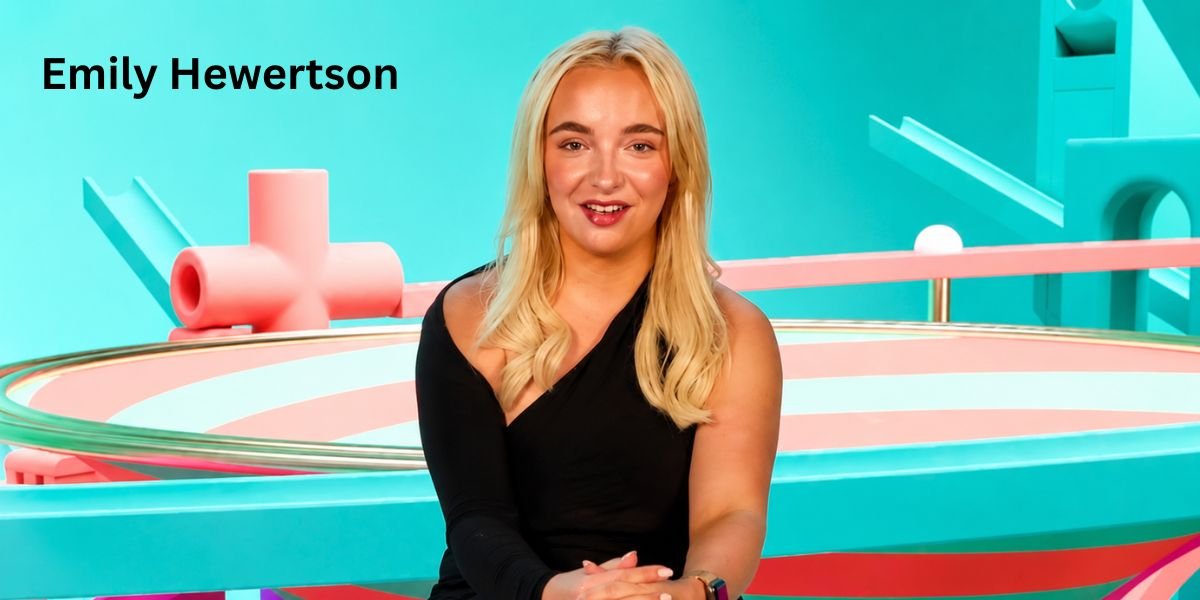
Emily Hewertson has built a public profile that sits somewhere between politics, social media, television, and modern celebrity culture. She first attracted wider attention as a young Conservative and outspoken Brexit supporter, but her career has gradually expanded beyond traditional political commentary. Today, she is known not only for discussing British politics but also for appearing on television, building a substantial online audience, and becoming a finalist on Big Brother UK in 2025.
What makes her story interesting is the route she has taken. Hewertson did not become known through Parliament, a newspaper column, or a conventional broadcasting career. Instead, she emerged during an era when political personalities could build recognition through television appearances, viral moments, podcasts, and social media. ConservativeHome has even presented her as an example of the increasingly important political-influencer model, reflecting how political communication has changed in Britain.
Her political opinions have naturally made her a divisive figure. Supporters tend to appreciate the confidence with which she expresses conservative positions, while critics strongly disagree with some of her views and the way she communicates them. Either way, Emily Hewertson has succeeded in becoming recognisable well beyond the relatively small world of party activism. Her later move into reality television only expanded that recognition.
Who Is Emily Hewertson?
Emily Hewertson is a British political commentator, Conservative campaigner, writer, media personality, and social media influencer from Northampton. In earlier profiles from 2019, she was described as a 19-year-old Conservative Party member and committed supporter of Brexit. At the time, she was studying Politics and Religion at King’s College London, giving her an academic connection to many of the subjects she was beginning to discuss publicly.
Her involvement with the Conservative Party began even earlier. Hewertson has said that she joined the party when she was 16, placing formal political involvement at the centre of her life while she was still a teenager. By 2019, she was already participating in political discussions and writing about Brexit, including contributions to BrexitCentral, a pro-Brexit political website that operated until early 2020.
What separates Hewertson from many young political activists is what happened next. Rather than concentrating entirely on a behind-the-scenes political career, she developed a public-facing identity. Television debates, social media commentary, political events, podcasts, and later reality television all became part of that identity. By the time she entered Big Brother in 2025 at the age of 25, she was described as a political influencer and political events professional with an already significant online presence.
From Northampton to a National Political Audience
One of the most important early moments in Hewertson’s public career came during the chaotic Brexit period of British politics. She appeared in the audience of the 9 May 2019 edition of BBC’s Question Time, which was filmed in Northampton. The episode focused heavily on Brexit and Theresa May’s struggle to secure parliamentary approval for a withdrawal agreement. Hewertson’s appearance helped bring the young Conservative activist to a considerably wider audience.
The timing mattered. Britain was deeply divided over Brexit, and younger voters were frequently presented as overwhelmingly pro-Remain. Hewertson therefore stood out as a young woman publicly defending a strongly pro-Brexit political position. Contemporary coverage described her as an increasingly visible young Brexiteer, while BrexitCentral identified her as both a Conservative member and an enthusiastic Brexit supporter from Northampton.
That visibility gave Hewertson something extremely valuable in modern politics: a recognisable personal identity. She was not simply another party member repeating an official message. Her age, communication style, appearance, and willingness to argue controversial political positions made her easy to remember. That combination would later become central to the personal brand she developed online.
How Social Media Turned Politics Into a Personal Brand
Political communication has changed dramatically over the past decade. Politicians and commentators once relied heavily on newspapers, television networks, and radio producers to reach large audiences. Social media weakened that gatekeeping system. Someone with a strong personality and a clear political position can now communicate directly with thousands or even millions of people without holding elected office.
Hewertson became part of that shift. Her online profile developed alongside regular appearances in political media, allowing her to move between serious political debate and a more informal style of communication. By the time ConservativeHome interviewed her for its Blueprint podcast in December 2024, it described her as a political influencer and focused heavily on the relationship between social media, conservatism, political debate, and younger voters.
Interestingly, Hewertson has also acknowledged some of the problems that come with this model. During that ConservativeHome discussion, she reflected on an earlier tendency to focus heavily on clicks and online attention. She also spoke about misinformation, hostile exchanges, echo chambers, and the personal abuse that can accompany political visibility. That admission highlights a wider challenge for influencers in politics: the content that generates the strongest reaction isn’t necessarily the content that produces the best political discussion.
Her Political Identity: Conservative, Pro-Brexit, and Not Easily Boxed In
Brexit has been one of the clearest themes running through Hewertson’s public political identity. Her early contributor biography described her as an avid Brexiteer, while later interviews showed that she continued to defend the decision to leave the European Union even while acknowledging problems with the way Brexit had been implemented.
Her relationship with the wider British right is slightly more complicated. During her 2024 ConservativeHome interview, Hewertson discussed Reform UK and revealed that she had considered joining the party. She spoke positively about some aspects of Reform’s development but said she had chosen to remain with the Conservatives. She also expressed interest in closer cooperation across Britain’s political right, illustrating some of the tensions facing conservative voters as Reform grew in prominence.
That position is useful for understanding her broader political appeal. Hewertson represents a younger style of conservatism that is comfortable with social media, personality-led politics, and direct communication. At the same time, she has remained associated with the traditional Conservative Party rather than simply shifting allegiance whenever another party becomes fashionable. Her politics may be controversial, but there is a recognisable consistency running through much of her public career.
Emily Hewertson and Big Brother 2025
The biggest expansion of Hewertson’s profile outside politics came in September 2025 when she entered ITV’s Big Brother UK. She was 25 at the time and entered the house with far more public recognition than the average civilian contestant because of her political and social media career. Her introductory material placed considerable emphasis on her Conservative background, including the fact that she had joined the party at 16 and worked around Westminster political events.
Her first experience in the house was remarkably short. A launch-night twist put contestants at immediate risk, and Hewertson became the first person eliminated from the 2025 series. She later argued that viewers had been required to make judgments based on extremely limited introductory footage and that being presented primarily through her political identity put her at a disadvantage. Shortly afterward, she wrote about the experience for ConservativeHome, describing her attempt to show audiences there was more to her personality than the political stereotype attached to her.
That would normally have been the end of the story. Instead, the programme brought Hewertson back. On Day 20, she returned as part of a secret-room twist alongside former Big Brother housemate Farida Khalifa. Hewertson subsequently re-entered the main competition and stayed until the final stages of the series.
The turnaround was extraordinary. Having gone from a night-one eviction to re-entering the competition, Hewertson eventually reached the final and finished in fifth place. It transformed her Big Brother story from a brief and slightly embarrassing exit into one of the season’s most unusual journeys. Her own social media profiles have since prominently referenced the fact that she went from an immediate eviction to becoming a 2025 finalist.
Controversy, Criticism, and the Cost of Being Outspoken
Being publicly political on social media almost guarantees disagreement, and Hewertson has experienced plenty of it. Her views on Brexit, the Conservative Party, cultural debates, and other political issues regularly generate strong reactions. She has also spoken publicly about receiving serious online abuse because of her politics. In interviews, she has described how political disagreements have sometimes turned into personal attacks rather than debates about policy.
There have also been examples of misinformation involving her. During the 2024 general election period, Hewertson was incorrectly identified by some social media users as the woman who threw a milkshake at Nigel Farage. Media reports later clarified that Hewertson was not responsible. The incident demonstrated an uncomfortable side of internet culture: once a claim begins spreading rapidly, correcting it can be much harder than starting it.
At the same time, criticism of a public commentator should not automatically be dismissed as abuse. Hewertson intentionally participates in controversial political debates, so disagreement is an unavoidable part of her work. The important distinction is between challenging somebody’s arguments and targeting them personally. Her career provides a useful example of how blurred that boundary can become when politics, entertainment, personality, and social media are all operating in the same space.
Why Emily Hewertson Still Matters in British Media
By 2026, Hewertson had continued appearing in British political media rather than disappearing after her reality-TV experience. GB News has featured her as a political commentator discussing current issues, including political and cultural debates surrounding national identity and the display of British flags. She has also appeared in business-oriented media discussion, demonstrating that her public profile extends beyond a single television programme.
Her relevance also tells us something broader about how political influence works today. You no longer need to be an MP, newspaper editor, or full-time television presenter to occupy space in political discussion. People can move from social platforms to podcasts, live television, political events, entertainment programmes, and back again. Hewertson’s career is a clear example of that hybrid media model.
Whether that development is good for politics is another question. Critics may argue that personality-driven political media encourages confrontation and rewards controversial statements. Supporters may respond that social platforms have opened political debate to younger voices who would previously have struggled to get through traditional media gatekeepers. Hewertson’s career sits directly inside that debate, which is one reason people continue to search for and discuss her.
What Makes Emily Hewertson Different From a Traditional Political Commentator?
A traditional commentator usually develops credibility through journalism, academia, party employment, or years of broadcasting. Hewertson’s route has been much less conventional. She started as a teenage party member, gained recognition during the Brexit debate, developed an audience through social media, appeared repeatedly in broadcast discussions, worked around political events, and eventually entered one of Britain’s best-known reality television programmes.
That mixture can make her difficult to categorise. Calling her simply a Conservative activist ignores her media career. Calling her only an influencer ignores years of political involvement. Describing her as a reality-TV personality ignores the fact that she was discussing national politics years before appearing on Big Brother. The most accurate description is probably a combination of political commentator, campaigner, influencer, and media personality.
It is also why her career could continue in several directions. She could deepen her involvement in political broadcasting, concentrate on digital media, remain involved with Conservative campaigning, move further into mainstream entertainment, or combine all of them. Her professional path so far suggests that maintaining a single traditional job title is not necessarily the point.
Frequently Asked Questions About Emily Hewertson
Who is Emily Hewertson?
Emily Hewertson is a British political commentator, Conservative activist, social media personality, and television personality. She became publicly known through her outspoken political opinions, particularly her support for Brexit and the Conservative Party.
How old is Emily Hewertson?
Emily Hewertson was reported to be 25 years old when she appeared on Big Brother UK in 2025. She had already spent several years building a public profile through politics, television discussions, and social media before joining the programme.
Where is Emily Hewertson from?
Emily Hewertson is from Northampton, England. Her connection with Northampton became particularly noticeable when she appeared in the audience of BBC’s Question Time during an episode filmed in the town in 2019.
What political party does Emily Hewertson support?
Emily Hewertson has been closely associated with the Conservative Party and has said that she joined the party when she was 16. Although she has discussed Reform UK and developments on the British political right, she has continued to identify primarily with Conservative politics.
Was Emily Hewertson on Big Brother?
Yes. Emily Hewertson appeared on Big Brother UK in 2025. She was initially eliminated during an early twist but later returned to the competition and eventually reached the final, finishing in fifth place.
Why is Emily Hewertson famous?
Emily Hewertson became known through a combination of political activism, Brexit commentary, television appearances, and social media. Her profile expanded further when she participated in Big Brother UK, introducing her to an audience outside political media.
What did Emily Hewertson study?
Emily Hewertson studied Politics and Religion at King’s College London. Her university studies closely matched her growing interest in British politics, political communication, social issues, and public debate.
Is Emily Hewertson a politician?
Emily Hewertson is better described as a political commentator, campaigner, and media personality rather than an elected politician. She has been involved with Conservative politics for years, but her public career has mainly developed through campaigning, social media, political commentary, and television.
Conclusion
Emily Hewertson represents a distinctly modern type of British public figure. Her story began with teenage Conservative activism and strong support for Brexit, developed through political television and social media, and eventually crossed into mainstream entertainment. Her 2025 Big Brother experience—being eliminated almost immediately before returning and reaching the final—made her known to viewers who may never have encountered her political commentary.
She remains controversial because politics is central to her public identity. Some audiences strongly agree with her conservative views, while others oppose them just as strongly. Yet reducing her career entirely to those disagreements misses the more interesting point. Hewertson has demonstrated how political personalities can now build careers across several different forms of media instead of following the conventional route from party politics into journalism or broadcasting.