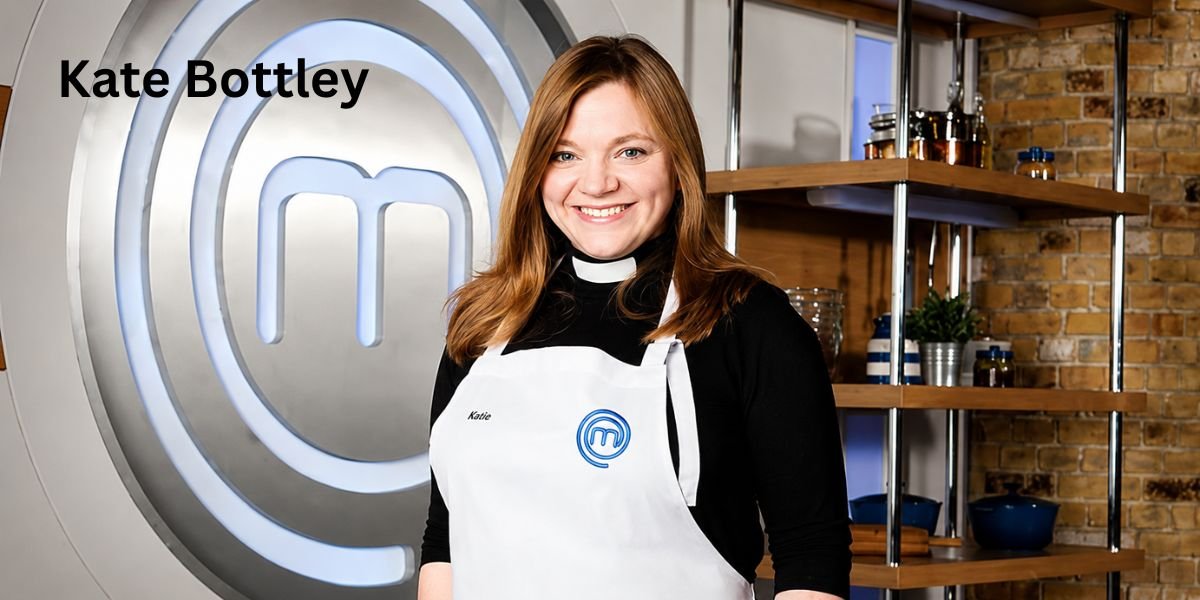
Kate Bottley has built one of the more unusual careers in British broadcasting. She is an ordained Church of England priest, former religious education teacher, television personality, radio presenter, journalist, and author. Instead of fitting neatly into one professional category, she has managed to combine faith, broadcasting, humour, and everyday conversation in a way that feels unusually natural.
Many viewers first became familiar with her through Channel 4’s Gogglebox, but television was not where her working life began. Long before she was sitting on a sofa discussing TV programmes in front of millions of viewers, Bottley was teaching religious education and later serving within the Church of England. Her eventual move into broadcasting developed almost accidentally after a wedding video attracted widespread online attention.
What makes Kate Bottley especially interesting is that she has never appeared particularly interested in becoming a conventional celebrity. Her public work still revolves heavily around conversations about faith, relationships, grief, hope, community, and ordinary human experiences. That combination has helped her move comfortably between religious programming and mainstream entertainment without seeming as though she is playing two different characters.
Who Is Kate Bottley?
The Reverend Canon Kate Bottley is an English Church of England priest and broadcaster originally from Sheffield. Her professional life has covered education, parish ministry, journalism, television, and radio. She is particularly associated with Gogglebox, BBC Radio 2’s Good Morning Sunday, and BBC television’s Songs of Praise.
Describing her simply as a television presenter does not quite explain her career. Her work as a priest came before national fame, rather than being something added to a media career afterwards. She was ordained as a deacon in 2008 and as a priest in 2009, following years spent working in education. That background gives her broadcasting a noticeably different flavour from the traditional celebrity-presenter route.
She has also become known for making conversations about Christianity accessible to people who may not consider themselves particularly religious. Her approach is usually conversational rather than formal. Faith is presented alongside the ordinary complications of life instead of as something separate from them, an approach that also sits at the heart of her book Have a Little Faith.
Kate Bottley’s Early Career in Education
Before entering ordained ministry, Kate Bottley trained as a religious education teacher. According to the University of Sheffield, she trained in Leeds before returning to Sheffield and working at Ecclesfield Secondary School for three years. She later became Head of Religious Education at Yewlands Technology College in Grenoside.
That teaching experience is worth paying attention to because it helps explain some of Bottley’s later success as a broadcaster. A good teacher has to take complicated ideas and make them understandable without talking down to people. Much of Bottley’s radio and television work follows the same principle: serious topics are discussed in language that feels comfortable, personal, and easy to follow.
Teaching religious education would also have required her to deal with beliefs from different perspectives rather than assuming everyone in the room thought the same way. That quality appears throughout her later media work. Her programmes frequently involve people with different religious traditions, levels of faith, or no religious affiliation at all, while her public message generally focuses on listening and finding shared human experiences.
Her Journey From Teacher to Church of England Priest
Bottley’s route towards ordination was not presented as a dramatic lifelong master plan. Her connection with church life developed gradually, and she eventually moved from teaching into training for ordained ministry. She was ordained as a Church of England deacon in 2008 and became a priest the following year.
Her ministry included work in North Nottinghamshire. Over the years, she served in parish and chaplaincy roles while becoming increasingly involved in broadcasting. Her religious career did not disappear when television opportunities arrived; instead, it remained one of the defining elements of her public identity. That distinction matters because audiences were encountering an actual working priest rather than a television personality simply discussing religion.
In May 2021, Bottley became an Honorary Canon of Southwell Minster. The appointment added another formal chapter to her church career while her media profile continued to grow. Her ability to remain connected with ministry while working in broadcasting has helped challenge the rather narrow stereotype many people may have of what a modern Church of England priest looks or sounds like.
How a Wedding Video Changed Kate Bottley’s Career
The turning point in Kate Bottley’s public career came from a situation that had very little to do with conventional television auditions. While officiating at a wedding, she took part in a choreographed flash mob involving Kool & the Gang’s Celebration. A video of the moment spread widely online and attracted millions of views.
The popularity of that video caught the attention of the people behind Channel 4’s Gogglebox. Bottley subsequently appeared on the programme alongside her husband, Graham, becoming a regular presence for several series. The show gave viewers an opportunity to see her outside the formal environment normally associated with clergy. She could discuss television, laugh, disagree, joke, and react like anyone else watching from home.
That proved important for her wider career. Gogglebox did not make her interesting simply because she was a vicar watching television; it showed that her personality translated naturally to the screen. Audiences responded to her warmth and humour, and television producers could see that she was comfortable discussing everything from ordinary entertainment to more serious subjects. From there, considerably more broadcasting work followed.
Kate Bottley’s Television Career Beyond Gogglebox
After becoming known through Gogglebox, Kate Bottley developed a much broader television career. She became closely associated with the BBC’s Songs of Praise, where her background as a priest naturally complements the programme’s focus on Christianity, worship, communities, and personal experiences of faith.
Her television appearances have not been restricted to explicitly religious shows. She has appeared across entertainment, factual, quiz, and daytime programmes, including programmes such as The One Show, This Morning, Celebrity Mastermind, and other popular British television formats. This variety has allowed her to avoid being treated solely as a specialist religious commentator.
That versatility is one of the more interesting parts of her media career. Moving from a discussion about spirituality to mainstream entertainment can feel awkward if a presenter’s public persona is too carefully constructed. Bottley’s advantage is that the same personality tends to work in both settings. Her humour does not disappear when the subject becomes serious, while her role as a priest does not prevent her from participating in lighter entertainment.
Kate Bottley on BBC Radio
Radio has become another major part of Kate Bottley’s broadcasting work. She became associated with BBC Radio 2 through programmes dealing with faith, reflection, and Sunday-morning conversation, and she has presented Good Morning Sunday alongside Jason Mohammad. The University of Sheffield’s January 2025 profile described her as a current presenter of the programme.
She had previously presented The Sunday Hour on BBC Radio 2 and contributed to other programmes, including Pause for Thought. These appearances suited her particular style because radio allows complicated subjects to unfold through conversation rather than relying on dramatic television presentation.
For Bottley, discussing religion on mainstream radio is rarely just about explaining church doctrine. Conversations can move towards family, loss, happiness, relationships, identity, community, and the questions people ask when life becomes difficult. That broader approach helps explain why she can speak both to committed Christians and listeners who might have little connection to organised religion.
Have a Little Faith and Kate Bottley as an Author
Kate Bottley expanded her work into books with Have a Little Faith: Life Lessons on Love, Death and How Lasagne Always Helps. The book explores belief in a deliberately broad and approachable way, looking at how faith, hope, doubt, relationships, grief, and everyday experiences overlap. The original hardback was published in 2023, with Penguin also listing a later edition released in March 2024.
Importantly, the book is not written only for regular churchgoers. Penguin describes its central idea as a consideration of faith that can include religious belief but can also involve hope, trust in humanity, or a sense that life has meaning beyond immediate circumstances. That makes the book consistent with Bottley’s wider broadcasting approach: invite people into the conversation rather than first asking them to prove that they belong there.
The book also demonstrates how her public identity has developed. Early media attention understandably focused on the novelty of a lively vicar appearing on Gogglebox. Writing a full book gave Bottley more space to explain the thinking behind the personality viewers had already encountered. Humour remains part of the package, but the deeper subjects include conflict, loneliness, love, confidence, grief, and personal vulnerability.
Faith, Humour and Kate Bottley’s Public Appeal
Religion on television can be difficult territory. Make the discussion too formal and a large part of the audience switches off. Simplify everything too much and the conversation loses meaning. Kate Bottley’s style occupies a useful middle ground because she is willing to discuss faith seriously without behaving as though every conversation needs to become a sermon.
Humour plays an important role in that approach. Her public persona is cheerful and often self-deprecating, but it does not mean difficult subjects are avoided. Her broadcasting and writing regularly touch on grief, loneliness, conflict, uncertainty, and the messy reality of relationships. Have a Little Faith, for example, specifically places subjects such as love, loss, confidence, conflict, and loneliness within a wider discussion about belief and hope.
This accessibility also helps explain why her career has stretched across such different formats. Someone who first encountered her laughing on Gogglebox may later see her discussing belief on Songs of Praise or hear her on BBC Radio 2. Instead of those appearances feeling completely unrelated, the common thread is usually curiosity about people and the stories they carry.
Recognition and Her Honorary Degree
Kate Bottley’s contribution has also received recognition outside television and the Church. In January 2025, the University of Sheffield awarded her an honorary Doctor of Medicine. The university said the honour recognised her successful career and her work supporting inclusivity in society.
The award was particularly fitting given her Sheffield roots. Her journey had taken her from education and local church life into national radio and television, but Sheffield remained an important part of her background. The university highlighted both her media work and her efforts to bring stories involving faith, belief, marginalised communities, and social issues to wider audiences.
Awards do not explain why a broadcaster connects with an audience, of course, but this particular recognition says something about the breadth of Bottley’s career. Her work has never been restricted to entertainment alone. Education, religion, communication, and questions of social inclusion have all remained part of the larger picture.
Why Kate Bottley Stands Out in British Broadcasting
One reason Kate Bottley stands out is that she arrived in national television with a substantial career already behind her. She had been a teacher and had entered ordained ministry before becoming widely recognised as a broadcaster. That gives her a professional perspective quite different from someone whose career began specifically in television.
She has also avoided becoming trapped by the programme that first made her famous. Being known as the “vicar from Gogglebox” could easily have become a temporary television novelty. Instead, she turned that visibility into a much wider body of work involving radio, factual television, religious broadcasting, journalism, entertainment appearances, and a published book.
Perhaps most importantly, her career shows that expertise does not have to sound distant. Bottley can speak from the perspective of an ordained priest while admitting uncertainty, making jokes, and acknowledging the untidy parts of ordinary life. For modern audiences who may be suspicious of overly polished public figures, that willingness to sound human is a considerable advantage.
Frequently Asked Questions About Kate Bottley
Who is Kate Bottley?
Kate Bottley is a British Church of England priest, television personality, radio presenter, author, and journalist. She became widely recognised after appearing on Channel 4’s Gogglebox alongside her husband, Graham.
Before entering television, she worked as a religious education teacher and later became an ordained priest. Her background in education and ministry has strongly influenced the approachable way she discusses faith and everyday life.
She has since built a broader media career, appearing on programmes such as Songs of Praise and presenting religious and lifestyle content on BBC Radio 2.
Is Kate Bottley still a vicar?
Kate Bottley remains an ordained priest in the Church of England, although much of her public work now focuses on broadcasting, writing, and public speaking.
She was ordained as a deacon in 2008 and became a priest in 2009. Her religious background continues to be an important part of her professional identity.
In 2021, she was also appointed an Honorary Canon of Southwell Minster, reflecting her continued connection with the Church.
Why did Kate Bottley become famous?
Kate Bottley first attracted widespread public attention after a video from a wedding she conducted went viral online. The video showed her taking part in a lively flash mob during the celebrations.
That unexpected online popularity helped bring her to the attention of the team behind Channel 4’s Gogglebox. She later joined the programme with her husband and quickly became a recognisable face.
Her warm personality, humour, and relaxed approach helped her move beyond Gogglebox into radio, factual television, religious broadcasting, and other mainstream programmes.
Who is Kate Bottley’s husband?
Kate Bottley is married to Graham Bottley, who also appeared with her during her time on Gogglebox. Their natural conversations and reactions helped make them familiar to viewers of the programme.
Kate has occasionally discussed family life as part of her broadcasting and writing, although she generally keeps much of her private life separate from her professional work.
Her public career tends to focus more heavily on faith, relationships, community, broadcasting, and everyday experiences than on celebrity-style coverage of her family.
What book has Kate Bottley written?
Kate Bottley is the author of Have a Little Faith: Life Lessons on Love, Death and How Lasagne Always Helps. The book explores faith, hope, relationships, grief, doubt, and the challenges people experience throughout life.
Rather than presenting faith only from a formal religious perspective, Bottley uses personal stories and everyday experiences to make the subject more accessible.
The book reflects the same conversational style that has helped make Kate Bottley popular on television and radio, combining serious ideas with warmth and humour.
Conclusion
Kate Bottley’s story is unusual because none of its major stages look like an obvious preparation for the next one. Teaching religious education does not normally lead to television fame. Becoming a Church of England priest does not automatically result in a place on Gogglebox. And appearing on a reality television programme certainly does not guarantee a lasting career across BBC radio, factual broadcasting, journalism, and publishing. Yet in Bottley’s case, those stages connect remarkably well.
Her success appears to come from keeping the same basic strengths across different platforms: communicating complicated subjects clearly, listening to other people’s experiences, finding humour in everyday life, and treating faith as something that can be discussed without shutting non-religious audiences out of the conversation. Those qualities are equally useful in a classroom, church, radio studio, and television programme.