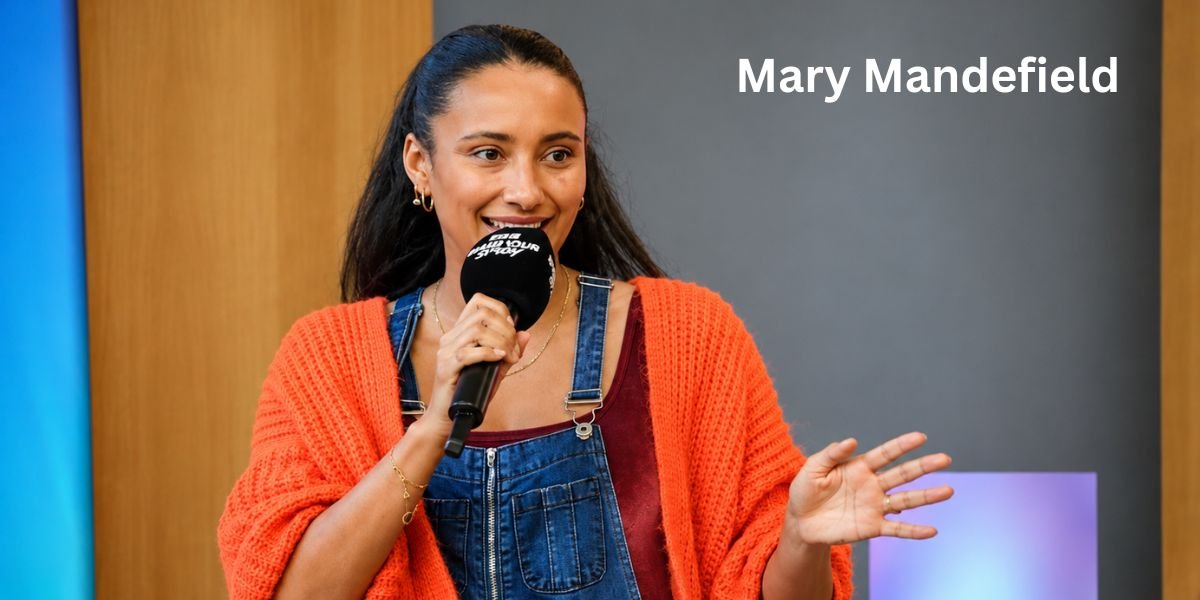
Mary Mandefield is a British presenter, journalist, and creative whose career reflects how modern media is changing. Rather than limiting herself to a single platform, she has worked across radio, digital journalism, television, and creative storytelling. Based in London, Mandefield describes her work as being centred on finding power in your voice, using a platform positively, and helping audiences understand important stories.
Her style feels particularly relevant to younger audiences who want news and social issues explained without the stiff tone traditionally associated with broadcasting. She can move between serious journalism and relaxed entertainment while maintaining an approachable personality. That flexibility has helped her build experience with established broadcasters while developing an individual identity of her own.
What makes Mary Mandefield interesting is not simply a list of presenting jobs. Her career illustrates a broader shift in British media, where broadcasters increasingly need to understand radio, social platforms, video journalism, interviews, entertainment, and investigative reporting at the same time. Mandefield has developed a career that sits naturally within that changing environment.
Who Is Mary Mandefield?
Mary Mandefield is a London-based presenter, journalist, and creative. According to her official website, she focuses on breaking down major topics and current affairs for younger, news-interested audiences. She also describes herself as an advocate for people finding power in their voices and using their platforms to create positive change.
That description is useful because it explains the connection between the different parts of her career. On the surface, radio entertainment and investigative journalism might seem like two very different jobs. One requires relaxed conversation and personality, while the other demands research, questioning, accuracy, and persistence. Mandefield’s work shows that those skills can actually complement each other.
Her public identity is therefore broader than that of a conventional radio host. She has presented music programming, worked on current-affairs content, produced talk programming, created digital material, and undertaken television journalism. Her LinkedIn profile similarly identifies her as a presenter, journalist, and creative living in London, reinforcing the multi-platform nature of her work.
Her ability to communicate complicated subjects in an accessible way appears to be one of the strongest themes running through her professional work. Instead of treating young audiences as people who are uninterested in serious news, her approach recognises that presentation matters. Relevant issues can attract young viewers and listeners when they are explained clearly and delivered through platforms they already use.
Mary Mandefield’s Journey Into Journalism and Broadcasting
Mary Mandefield route into media was not presented publicly as a perfectly planned career path. A 2023 report about a talk she gave during Leeds Trinity University’s Journalism and Media Week described how an accidental deletion of her university application contributed to an unexpected career journey. The experience became part of a wider discussion about entering journalism and building a broadcasting career.
That background makes her story useful for aspiring journalists because creative industries rarely follow a perfectly predictable route. Broadcasting careers often develop through a combination of production work, presenting opportunities, freelance projects, networking, experimentation, and learning new formats. Mandefield’s professional history reflects that reality.
An important stage in her development was her work at Westside Radio. Her official biography states that she spent three years producing and hosting the talk programme Bringing it Black, which shared stories connected with Black communities across the UK. Producing and presenting a talk programme requires more than simply speaking confidently into a microphone. It involves understanding guests, planning discussions, recognising worthwhile stories, managing timing, and maintaining audience attention.
Experience behind the scenes can also make a presenter stronger on air. Understanding how programmes are researched, structured, edited, and produced gives broadcasters a clearer idea of what the entire production team needs from them. Mary Mandefield progression across production and presenting therefore appears to have given her a useful combination of editorial and performance skills.
Mary Mandefield’s Work in Radio
Radio remains one of the most visible parts of Mary Mandefield career. Her official website says she has hosted Hits Radio overnight and early-breakfast programming, bringing music and conversation to listeners during hours when creating a sense of companionship is especially important. The official Hits Radio presenter page also identifies Mandefield as one of its presenters.
Overnight and early-morning broadcasting has its own challenges. Audiences may include late-shift workers, early commuters, students, travellers, or people simply listening from home. The presenter needs enough personality to keep the programme engaging without making the show feel forced. Music radio also demands smooth transitions between entertainment, conversation, station features, and audience interaction.
Mandefield’s official biography additionally notes that she has covered 1Xtra Talks and Life Hacks on BBC Radio 1. Those roles demonstrate a different side of broadcasting because discussion-led programming can involve personal experiences, social issues, relationships, wellbeing, culture, and topics affecting younger listeners.
Moving comfortably between music-led broadcasting and discussion-based programming is an important professional skill. The tone required for a late-night music link can be completely different from the tone needed when discussing an important social issue. Mandefield’s work across these areas suggests versatility rather than dependence on one presenting format.
Radio has also provided an effective environment for developing the conversational quality associated with her public persona. Listeners often respond strongly to presenters who sound natural rather than overly rehearsed. That ability to communicate casually while remaining professional is increasingly valuable beyond radio as well, particularly in podcasts, digital video, social journalism, and presenter-led documentaries.
Journalism, Current Affairs and Meaningful Storytelling
Journalism is central to Mary Mandefield professional identity. Her own description of her work emphasises explaining major topics and current affairs for a young audience. This places her within a growing area of journalism focused on translating complicated events into understandable, digitally accessible storytelling.
Traditional news formats can sometimes feel distant to younger viewers. Digital journalism addresses that challenge through shorter explanations, direct language, presenter-led videos, visual storytelling, and distribution across social platforms. The journalist still needs to research carefully and maintain accuracy, but the delivery may feel much closer to an everyday conversation.
Mandefield has previously been associated with The News Movement, a digital media organisation focused heavily on audiences consuming journalism through modern platforms. A profile published by the Hertfordshire Mercury in 2022 identified her as a journalist at The News Movement as well as a presenter and creative.
That combination of journalism and digital presentation is significant. Today’s presenters cannot assume that audiences will sit down for a traditional news bulletin at a fixed time. Stories might instead reach people through short videos, social feeds, radio programmes, YouTube documentaries, newsletters, or podcasts. Journalists who understand those environments can potentially reach people who would otherwise avoid conventional news entirely.
Mary Mandefield focus on voice and representation also adds another layer to her journalism. Her earlier work with Bringing it Black involved highlighting stories from Britain’s Black communities. Giving communities space to discuss their experiences is not simply about representation on screen or radio; it can also expand which issues receive attention and whose perspectives are considered relevant.
Mary Mandefield and Channel 4
One of the clearest examples of Mary Mandefield moving into investigative television came through Channel 4. In December 2024, Channel 4 announced a group of digital-first programmes that included an investigative documentary fronted by Mandefield called Hunting the BBL Butchers.
According to Channel 4’s official announcement, the investigation examined rogue cosmetic-surgery clinics operating in Turkey. Mandefield’s reporting involved trying to identify and confront people connected with problematic practices while posing as a potential customer during parts of the investigation. The film was commissioned as a 20-minute digital-first investigative documentary.
The project represented a notable expansion of her journalistic profile. Investigative presenting is considerably different from reading prepared information or interviewing studio guests. The presenter becomes involved in gathering evidence, questioning subjects, dealing with uncertainty, and communicating findings responsibly.
Channel 4 described Mandefield alongside other young journalistic talents tackling important but comparatively under-discussed subjects. The broadcaster stated that these commissions were intended to investigate issues, encourage discussion, seek accountability, and reach digitally native audiences.
The project also demonstrates why Mary Mandefield combination of skills is valuable. A digital-first documentary requires someone who can conduct journalism while also communicating naturally to viewers accustomed to YouTube and social video. Being informative is essential, but so are pace, clarity, personality, and the ability to hold attention.
A Modern Approach to Presenting and Audience Connection
One reason Mary Mandefield career stands out is that she represents a newer type of broadcaster. Previous generations of presenters were often strongly associated with one programme, station, or medium. Today’s presenters may work on radio in the morning, produce digital journalism later, record online content, interview guests, appear in documentaries, and communicate directly with their audience through social media.
Mandefield maintains that kind of multi-platform presence. Her official website separates her work into areas including radio, on-screen presenting, features, and a newsletter, while her public social profiles extend that relationship with audiences further.
Social platforms have changed the relationship between broadcasters and the public considerably. Audiences can see far more of a presenter’s personality than they would through a traditional programme alone. This creates opportunities but also requires consistency. A presenter needs to remain credible enough for serious journalism while still feeling relatable in less formal online environments.
Mandefield seems comfortable operating between those worlds. Her professional image is polished without feeling excessively corporate, while her communication style remains energetic and conversational. That balance is particularly useful when working with younger audiences who are accustomed to creators speaking directly to them.
There is also an important lesson here for aspiring presenters. A recognisable broadcasting style is not necessarily created by developing an exaggerated personality. Often, it comes from identifying subjects you genuinely care about and developing a clear way of discussing them. Mary Mandefield recurring emphasis on curiosity, voice, representation, and meaningful storytelling gives her work a consistent thread even when the platforms change.
Why Mary Mandefield Appeals to Younger Audiences
Younger audiences are not necessarily uninterested in journalism; they simply consume information differently. Smartphones, short-form video, streaming services, podcasts, creator platforms, and social feeds compete constantly for attention. A presenter hoping to communicate with that audience must understand both journalism and digital culture.
Mary Mandefield work sits naturally at that intersection. She can approach a subject with journalistic intent while presenting it in a way that does not feel disconnected from everyday conversation. Her official description specifically identifies young, news-hungry audiences as a focus of her work.
Authenticity matters in this environment. Younger viewers are familiar with highly produced advertising and carefully constructed celebrity personas, so obvious attempts to manufacture relatability can quickly feel artificial. Presenters tend to build stronger connections when their personality supports the subject rather than distracting from it.
Mandefield’s career also demonstrates that entertainment and serious journalism do not have to exist at opposite ends of the industry. A broadcaster can introduce music on one programme and investigate an important social issue in another. The crucial factor is understanding the responsibility and tone required by each format.
This flexibility could become even more important as the distinction between television, radio, podcasts, social media, and digital publishing continues to blur. Broadcasters capable of adapting a story to several formats are increasingly useful because media organisations themselves are distributing content across several channels.
Mary Mandefield’s Influence and What Makes Her Career Interesting
It would be premature to define Mary Mandefield solely by one programme or career achievement. What makes her professional journey more interesting is the variety of roles she has already taken on. Her credits span presenting, journalism, production, radio, digital media, community-focused storytelling, and investigative television.
Her career also provides a practical example of why modern media professionals benefit from developing transferable skills. Interviewing helps in radio and documentaries. Research strengthens journalism and hosting. Production knowledge improves presenting. Social-media experience helps journalists understand digital audiences. Instead of functioning separately, these abilities can reinforce one another.
Another significant element is her emphasis on communication with purpose. Mandefield has publicly described herself as someone who believes people can find power in their voices and use platforms to create change. Whether someone agrees with every subject a journalist chooses to cover is separate from the broader professional principle: media platforms carry influence, and presenters need to understand what they want to do with that influence.
For people considering broadcasting careers, her trajectory also offers a more realistic picture than the idea of instantly becoming a famous television presenter. Building experience through production, radio, community stories, digital journalism, freelance work, and smaller presenting opportunities can create the foundation needed for larger projects later.
Her journey is still developing, which makes definitive predictions about where her career will go inappropriate. However, her existing work demonstrates the kind of versatility increasingly demanded by modern broadcasting.
The Future of Mary Mandefield’s Media Career
The media industry is becoming increasingly platform-independent. Radio stations create video content, television broadcasters operate major YouTube channels, journalists build newsletters, and presenters communicate directly with audiences through social platforms. Mary Mandefield existing skill set positions her naturally within this environment.
Her transition from radio and digital journalism into an investigative Channel 4 project demonstrates that she is capable of moving between formats rather than remaining associated with one type of broadcasting. Future opportunities could logically continue across radio, television, documentaries, digital journalism, cultural reporting, or presenter-led factual programming, although specific future projects should not be assumed without official confirmation.
Continued growth will likely depend on the same characteristics visible throughout her career so far: curiosity, adaptability, communication skills, and an ability to connect serious topics with audiences who might not engage with conventional journalism. Those qualities are becoming increasingly valuable as broadcasters compete for attention across digital platforms.
It is also worth avoiding the temptation to measure a media professional’s success purely through social-media follower totals. Reach can matter, but journalistic credibility, quality of work, audience trust, interviewing ability, editorial judgement, and the strength of individual projects are ultimately more meaningful measures of a long-term broadcasting career.
FAQs About Mary Mandefield
Who is Mary Mandefield?
Mary Mandefield is a British presenter, journalist, and creative based in London. She has worked across radio, digital journalism, current affairs, and television, building a reputation for making important stories accessible to younger audiences.
What is Mary Mandefield known for?
Mary Mandefield is known for her work as a radio presenter and journalist. Her career includes presenting on Hits Radio, working on BBC Radio programming, producing community-focused content, and fronting investigative journalism projects.
Has Mary Mandefield worked for the BBC?
Yes. Mary Mandefield has covered programmes including 1Xtra Talks and Life Hacks on BBC Radio 1. These appearances helped demonstrate her ability to handle both entertainment-led and discussion-based broadcasting.
Does Mary Mandefield work for Hits Radio?
Mary Mandefield has presented programming for Hits Radio, including overnight and early-breakfast shows. Her radio work combines music, conversation, audience engagement, and a relaxed presenting style.
What Channel 4 programme did Mary Mandefield present?
Mary Mandefield fronted the Channel 4 digital-first investigative documentary Hunting the BBL Butchers. The programme investigated concerns surrounding rogue cosmetic surgery clinics and demonstrated a more investigative side of her journalism.
Where is Mary Mandefield from?
Mary Mandefield is a UK-based media professional and is publicly associated with London. Detailed information about her private background and personal life is relatively limited, as much of her public profile focuses on her professional career.
What makes Mary Mandefield popular with younger audiences?
Her conversational presenting style, understanding of digital platforms, and ability to explain serious subjects in accessible language make her work particularly suitable for younger audiences. She combines traditional journalistic skills with the informal communication style commonly used across modern digital media.
Conclusion
Mary Mandefield has developed a career that reflects the increasingly flexible nature of contemporary British media. She is a presenter, journalist, and creative who has worked across music radio, discussion programming, community storytelling, digital journalism, and investigative television. Her professional identity is tied together by a clear interest in communication, representation, and helping younger audiences engage with important subjects.
From producing and presenting Bringing it Black to broadcasting on Hits Radio and covering BBC radio programmes, Mary Mandefield has steadily expanded the range of her work. Her involvement in Channel 4’s Hunting the BBL Butchers added investigative documentary work to that portfolio and demonstrated another side of her abilities.